Large Crystals:
* Intrusive Igneous Rocks: These rocks form when magma cools slowly beneath the Earth's surface. The slow cooling allows ample time for mineral crystals to grow large. Examples include granite and gabbro.
* Pegmatites: These are a specific type of intrusive igneous rock with exceptionally large crystals, often several inches or even feet in size. They form from very late-stage, water-rich magma.
Small Crystals:
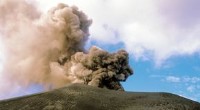
* Extrusive Igneous Rocks: These rocks form when lava cools quickly on the Earth's surface. Rapid cooling doesn't give the minerals much time to grow, resulting in small, often microscopic crystals. Examples include basalt and rhyolite.
Factors Influencing Crystal Size:
* Cooling Rate: The slower the cooling rate, the larger the crystals.
* Composition: Some minerals tend to grow larger crystals than others.
* Presence of Water: Water can act as a solvent and enhance crystal growth.
Exceptions:
* Glassy Textures: Some igneous rocks, like obsidian, cool so rapidly that crystals don't have time to form at all.
* Porphyritic Textures: These rocks have a mix of large crystals (phenocrysts) embedded in a matrix of smaller crystals or glass.
In summary, igneous rocks can have a wide range of crystal sizes, with large crystals being more typical of intrusive rocks and small crystals being more typical of extrusive rocks.