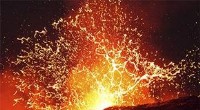
* Small Crystals: These are found in extrusive igneous rocks, which form when magma erupts onto the Earth's surface as lava. The lava cools quickly, giving the crystals less time to grow. This results in rocks like basalt and rhyolite with small, often microscopic, crystals.
* Large Crystals: These are found in intrusive igneous rocks, which form when magma cools slowly underground. The slower cooling allows crystals to grow larger. Examples include granite and gabbro.
* No Crystals: Rocks that cool extremely quickly, like obsidian (volcanic glass), have no visible crystals. The cooling process is so rapid that mineral atoms don't have time to arrange themselves into crystal structures.
So, the size of crystals in igneous rocks is a key indicator of how they were formed.