Here's a breakdown of how compression works:
* Forces: Compression arises from the movement of tectonic plates. When plates collide, the pressure between them pushes the rocks on their edges together.
* Deformation: This pressure causes the rocks to deform in various ways:
* Folding: Rocks bend and buckle, creating folds like anticlines (upward arches) and synclines (downward troughs).
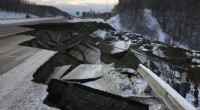
* Faulting: When the pressure becomes too great, the rocks may fracture and break, creating faults. The rocks along these faults may move past each other, resulting in earthquakes.
* Shortening: Compression leads to a reduction in the overall length of the rock mass, while its thickness increases.
* Impact on Earth's surface: Compression plays a major role in the creation of:
* Mountain ranges: Compression forces uplift the Earth's surface, creating mountain ranges. The Himalayas, the Alps, and the Andes are all examples of mountain ranges formed by compression.
* Valleys: Compression can also create valleys by folding the Earth's crust, creating synclines.
* Metamorphic rocks: The pressure and heat generated by compression can transform existing rocks into metamorphic rocks, changing their composition and texture.
In summary: Compression is a powerful geological force that shapes the Earth's surface through folding, faulting, and the formation of metamorphic rocks. It is a key driver in the creation of mountain ranges, valleys, and other prominent geological features.