Growth Rings:
* Trees: Trees produce a new ring of growth each year, with wider rings indicating favorable conditions (abundant sunlight, moisture, etc.) and narrower rings representing harsher conditions. This annual pattern allows scientists to count the rings to determine the age of a tree, and by studying the ring patterns of trees from different locations, they can reconstruct past climate conditions.
* Other Organisms: Similar to trees, other organisms like corals, clams, and some other marine life also produce growth rings. These rings can reveal information about ocean temperatures, salinity, and even the presence of pollutants.
* Determining Past Events: By comparing ring patterns across different samples, scientists can correlate events like volcanic eruptions, droughts, or changes in sea level with specific years in the past. This helps understand the timing and impact of these events on the Earth's history.
Ice Cores:
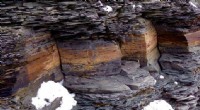
* Layers of Snow and Ice: Ice cores are drilled from glaciers and ice sheets, which accumulate layers of snow and ice over thousands of years. Each layer represents a different year.
* Trapped Information: As snow turns to ice, it traps air bubbles and other particles within the ice layers. These provide a record of the atmosphere's composition, temperature, and even volcanic activity at the time of their deposition.
* Dating and Climate Reconstruction: By analyzing the chemical composition and isotopes of the trapped air and particles, scientists can reconstruct past temperatures, atmospheric greenhouse gas concentrations, and other climate parameters. This provides valuable data about past climate changes, which can be linked to volcanic eruptions, solar activity, and other geological events.
Key Differences and Limitations:
* Time Scale: Growth rings are useful for shorter time scales, generally covering a few centuries to several thousand years. Ice cores offer a much longer record, going back hundreds of thousands to even millions of years.
* Geographical Scope: Growth rings are mostly limited to areas with trees or other organisms that produce annual growth patterns. Ice cores are more geographically widespread, covering polar regions and high-altitude glaciers.
* Resolution: Growth rings provide a higher-resolution record, especially for events happening within a specific year. Ice cores have lower resolution, especially for older layers, as they may represent multiple years of snowfall.
In summary, both growth rings and ice cores are valuable tools for understanding past geological events. They provide a unique and detailed record of Earth's history, helping scientists to unravel the mysteries of climate change, volcanic activity, and other significant events that have shaped our planet.