Here's a breakdown of Earth's atmospheric layers:
* Exosphere: This is the outermost layer, extending from about 700 km (435 miles) to 10,000 km (6,200 miles) above Earth. It's extremely thin and gradually fades into outer space.
* Thermosphere: This layer lies above the mesosphere, from about 80 km (50 miles) to 700 km (435 miles). It's characterized by very high temperatures due to absorption of solar radiation.
* Mesosphere: This layer sits above the stratosphere, from about 50 km (31 miles) to 80 km (50 miles). It's the coldest layer, with temperatures reaching -90°C (-130°F).
* Stratosphere: This layer lies above the troposphere, from about 10 km (6 miles) to 50 km (31 miles). It contains the ozone layer, which absorbs most of the sun's harmful ultraviolet radiation.
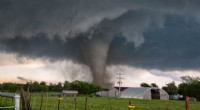
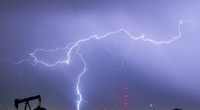
* Troposphere: This is the lowest layer of the atmosphere, extending from Earth's surface to about 10 km (6 miles). It's where most weather occurs, and it contains most of the atmosphere's mass.
While the exosphere is the thinnest layer in terms of density, it's still technically part of Earth's atmosphere and plays a role in protecting the planet from harmful solar radiation.