1. Convection Currents: The Earth's mantle is a layer of hot, semi-solid rock. Heat from the Earth's core creates convection currents within the mantle. This means hot, less dense rock rises, while cooler, denser rock sinks.
2. Drag and Plate Movement: As the hot, rising mantle material reaches the top of the asthenosphere (a soft, partially molten layer within the upper mantle), it exerts a force on the overlying tectonic plates. This force, combined with the weight of the plates themselves, causes the plates to move.
3. Plate Boundaries: The interaction between the mantle and the plates is strongest at plate boundaries. These are the places where plates either collide, diverge, or slide past each other.
* Divergent Boundaries: At these boundaries, the mantle's upward convection pulls the plates apart, creating new oceanic crust.
* Convergent Boundaries: At these boundaries, the denser plate subducts (slides) beneath the less dense plate. This process is driven by the mantle's downward convection. Subduction zones are associated with volcanoes, earthquakes, and mountain ranges.
* Transform Boundaries: These boundaries involve plates sliding past each other horizontally. While the mantle's convection is less directly involved here, it still plays a role in maintaining the overall movement of the plates.
4. Plate Motion and Geological Features: The movement of tectonic plates, driven by the mantle, is responsible for many of the Earth's most dramatic features:
* Mountain Ranges: Collisions between tectonic plates can create massive mountain ranges like the Himalayas.
* Volcanoes: Volcanoes form when magma rises from the mantle to the surface at divergent boundaries or subduction zones.
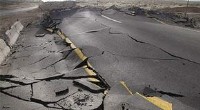
* Earthquakes: Earthquakes are caused by the sudden release of energy along fault lines, which are breaks in the Earth's crust that form at plate boundaries.
* Seafloor Spreading: The process of new oceanic crust being created at mid-ocean ridges, a result of diverging plates pulled apart by the mantle.
In summary, the mantle acts like a conveyor belt, dragging the tectonic plates across the Earth's surface. This interaction is responsible for the Earth's dynamic geology, including mountain building, volcanism, and earthquakes.