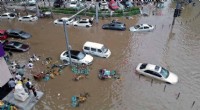
* Water deposition: Rivers and streams carry sediment, depositing it in their floodplains (bottomlands). Over time, this creates layers of fertile soil.
* Decomposition: Abundant organic matter (leaves, branches, etc.) decomposes in the water-rich environment, adding to the soil's thickness.
* Limited erosion: The constant moisture helps bind the soil together, reducing erosion and allowing for thicker accumulation.
While bottomlands can have thin soil in specific locations (like areas with fast-flowing water or recent landform development), the overall trend is towards thicker soil due to the factors mentioned above.
Rocky or light soil are less common in bottomlands. While rocky outcrops can exist, the constant water flow and deposition typically create a more fertile and less rocky environment. Light soil, characterized by low organic matter and poor water retention, is also less typical in bottomlands due to the presence of abundant organic matter and moisture.
Therefore, thick is the most accurate description of soil in bottomlands.