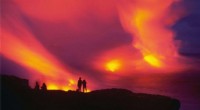
* Volcanic Eruptions: When volcanoes erupt, they release molten rock (magma) from underground. This magma, now called lava, flows onto the surface.
* Rapid Cooling: If the lava cools very quickly, the silica molecules within the lava don't have time to crystallize into minerals. This rapid cooling often happens when lava comes into contact with water, air, or ice.
* Obsidian Formation: The rapid cooling results in a glassy, amorphous solid with a smooth, conchoidal fracture. This is obsidian.
So, while tectonic activity doesn't directly form obsidian, it does play a crucial role:
* Plate Tectonics: The movement of tectonic plates is responsible for creating the geological environments where volcanoes form.
* Volcanic Activity: Volcanic eruptions, driven by tectonic activity, provide the lava that, upon rapid cooling, transforms into obsidian.
In summary, volcanic eruptions, fueled by tectonic activity, create the conditions necessary for the formation of obsidian.