Factors Affecting Sediment Settling:
* Particle Size: Smaller particles (clay, silt) settle much slower than larger particles (sand, gravel). This is due to the higher surface area to volume ratio of smaller particles, leading to greater resistance from the surrounding fluid.
* Particle Density: Denser particles settle faster than less dense ones. This is because gravity pulls more strongly on denser particles.
* Fluid Density and Viscosity: Water density and viscosity affect the settling rate. Higher density and viscosity slow down settling.
* Fluid Velocity: A faster current will keep sediments suspended, preventing them from settling. Slower currents allow for settling.
* Particle Shape: Irregularly shaped particles settle slower than spherical ones due to increased surface area and turbulence.
* Particle Charge: Electrostatic forces between particles can influence their settling rate.
Mechanisms of Sediment Settling:
* Stokes' Law: Applies to small, spherical particles settling in a fluid at low Reynolds numbers. It states that the settling velocity is proportional to the square of the particle's radius, the difference in density between the particle and the fluid, and the acceleration due to gravity.
* Hindered Settling: When particles are close together, they interact with each other, slowing down the settling rate. This is more significant for smaller particles.
* Flocculation: Small particles (clay) can stick together to form larger aggregates (flocs) that settle faster. This process is often driven by chemical interactions between the particles and the fluid.
Environmental Impact:
Sediment settling is a crucial part of many natural processes:
* Formation of Sedimentary Rocks: Over time, sediments settle and are compacted and cemented together to form sedimentary rocks.
* Water Clarity: Settling of suspended sediment improves water clarity.
* Habitat Formation: Sediments can create habitats for various organisms.
* Pollution Control: Settling helps remove pollutants from water bodies.
Human Impact:
Human activities can significantly alter sediment settling rates:
* Erosion: Construction, deforestation, and agriculture can increase erosion, leading to more sediment entering water bodies, impacting water clarity and harming aquatic life.
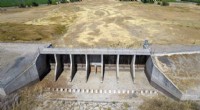
* Dams: Dams can trap sediment, reducing its transport downstream.
* Sediment Dredging: Dredging removes sediment from water bodies, potentially impacting ecosystems and altering natural processes.
Overall, sediment settling is a complex and dynamic process influenced by various factors. Understanding its mechanisms and impact is essential for managing water resources and protecting ecosystems.