Here are some possibilities:
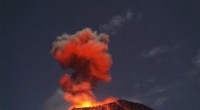
* Parasitic cone: This is the most likely term you're thinking of. Parasitic cones are smaller cones that develop on the sides of a larger volcano, often fed by a separate conduit that taps into the main magma chamber. These cones can erupt explosively or effusively, creating cinder cones, lava domes, or other features.
* Flank vent: This term refers to any vent that erupts on the sides of a volcano, not just a cone-shaped one. Flank vents can erupt lava flows, ash plumes, or other materials.
* Secondary crater: This refers to a smaller crater that forms on the flanks of a volcano, often as a result of an eruption or explosion. These craters can be circular or elongated, and may or may not be associated with a cone.
It's important to consider the context in which you encountered the term "secondary cone" to determine the most accurate interpretation. If you can provide more information about the specific situation, I can help you understand what it means.