Here's a breakdown:
* Solid: The mantle is composed primarily of silicate minerals, which are in a solid state.
* Viscous Fluid: Due to the intense heat and pressure, the minerals in the mantle can deform and flow extremely slowly. This is similar to how glaciers flow over long periods.
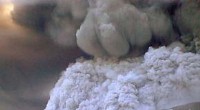
This unique behavior allows for convection currents within the mantle. Hotter, less dense material rises, while cooler, denser material sinks. This process drives plate tectonics and is responsible for earthquakes, volcanoes, and mountain formation.
So, while the mantle is technically solid, its ability to flow over geological timescales makes it behave like a viscous fluid.