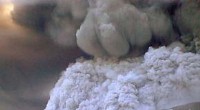
* Magma Formation: Magma, molten rock beneath the Earth's surface, often contains dissolved gases like water vapor, carbon dioxide, and sulfur dioxide.
* Ascent and Cooling: When magma rises towards the surface, the pressure decreases. This causes the dissolved gases to come out of solution and form bubbles within the magma.
* Solidification: As the magma cools and solidifies into igneous rock, these gas bubbles are trapped, leaving behind empty spaces, or vesicles.
* Size and Abundance: The size and abundance of vesicles vary depending on:
* Gas Content: Magma with a higher gas content will have more vesicles.
* Cooling Rate: Rapid cooling traps more gas bubbles, creating smaller and more numerous vesicles. Slow cooling allows gas to escape, resulting in fewer and larger vesicles.
Examples:
* Scoria: A type of volcanic rock with many large vesicles.
* Pumice: A light, porous volcanic rock with a high concentration of small vesicles, making it float on water.
* Basalt: Some basalts can have small vesicles, giving the rock a frothy appearance.
Note: While trapped gas is the primary cause of vesicles, other factors like the presence of crystals or other minerals can also influence the formation and appearance of holes in igneous rocks.