Earth's History and Evolution:
* Paleontology: The study of ancient life forms through fossils.
* Stratigraphy: Studying layers of rock (strata) to understand the sequence of events in Earth's history.
* Geochronology: Determining the ages of rocks and geological events using radioactive decay.
* Historical Geology: Reconstructing the Earth's history through geological evidence.
Earth's Composition and Structure:
* Mineralogy: Identifying and classifying minerals based on their chemical composition, crystal structure, and physical properties.
* Petrology: Studying the formation, composition, and texture of rocks.
* Geochemistry: Analyzing the chemical composition of rocks, minerals, and fluids to understand Earth's processes.
* Structural Geology: Examining the deformation of rocks and the formation of geological structures like folds and faults.
Earth's Processes:
* Tectonics: The study of the movement of Earth's lithospheric plates and its impact on landforms, earthquakes, and volcanoes.
* Volcanology: The study of volcanoes, their eruptions, and the associated hazards.
* Seismology: The study of earthquakes, including their causes, propagation, and effects.
* Geomorphology: The study of landforms and their evolution through various processes like erosion, weathering, and deposition.
* Hydrogeology: The study of groundwater, its movement, and its interaction with the environment.
* Glaciology: The study of glaciers, their formation, movement, and impact on the landscape.
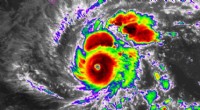
* Meteorology: The study of weather patterns and their interaction with the Earth's surface.
Other Important Areas:
* Environmental Geology: The study of geological processes and their impact on the environment and human activities.
* Economic Geology: The study of mineral and energy resources and their extraction.
* Engineering Geology: Applying geological knowledge to construction projects and infrastructure development.
* Planetary Geology: Studying the geology of other planets and celestial bodies in our solar system.
Interdisciplinary Nature:
Geology is highly interdisciplinary, drawing from other fields like chemistry, physics, biology, mathematics, and computer science. This makes it a dynamic and evolving field with endless possibilities for research and application.