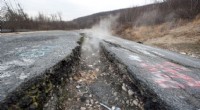
Here's a breakdown of how they form:
* Glacial movement: Glaciers are masses of ice that move slowly but powerfully. As they move, they carry with them rocks and sediment that become embedded in their base.
* Abrasion: The embedded rocks act like sandpaper, scraping and grinding against the bedrock. This process is called abrasion.
* Grooves: Over time, the constant abrasion carves deep, linear grooves into the rock surface. These grooves are typically parallel to the direction of the glacier's movement.
Characteristics of glacier grooves:
* Linear: They run in a straight or slightly curved line, following the direction of glacial movement.
* Deep: They can range from shallow scratches to deep, well-defined grooves.
* Parallel: Multiple grooves often run parallel to each other.
* Located in bedrock: They are found on exposed bedrock surfaces that were once covered by glaciers.
Significance of glacier grooves:
* Evidence of past glaciation: They are one of the most prominent and widely recognized indicators of past glacial activity.
* Direction of glacial movement: They provide valuable information about the direction and extent of past glaciers.
* Understanding glacial erosion: They demonstrate the powerful erosive force of glaciers and how they can sculpt the landscape.
* Geological studies: They are important features for geologists and paleoclimatologists who study past climates and glacial history.
You can find glacier grooves in many locations around the world, particularly in regions that were once covered by glaciers, such as:
* North America
* Europe
* Asia
* South America
* Antarctica
If you ever have the chance to visit a glacial landscape, take a moment to admire the grooves. They tell a powerful story of the planet's changing climate and the immense force of nature.