Weathering:
* Mechanical weathering: Waves crashing against the shore cause physical breakdown of rocks. This can be seen in the form of abrasion (rocks grinding against each other), impact (waves hitting the shore), and even salt crystallization (saltwater evaporating and leaving behind crystals that exert pressure on rocks).
* Chemical weathering: The salty seawater also causes chemical weathering of rocks, particularly through dissolution (rocks dissolving in the water). This process weakens the rocks and makes them more susceptible to erosion.
Erosion:
* Wave action: Waves are the primary force driving erosion along the Texas coastline. As waves hit the shore, they carve out the land, leading to the formation of cliffs, sea caves, and arches.
* Currents: Ocean currents also play a role in erosion, carrying away eroded sediments and further shaping the coastline.
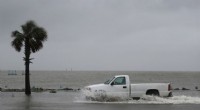
* Storms: Powerful storms like hurricanes can cause significant erosion due to the combined forces of strong winds, large waves, and storm surge.
Deposition:
* Beaches: Eroded sediments are transported by waves and currents and deposited along the coast, forming beaches. These beaches act as natural barriers against storm surges and provide valuable recreational areas.
* Sandbars: Waves can also deposit sediments offshore, creating sandbars. These submerged sand formations play a role in shaping the coastline and influencing wave patterns.
* Barrier islands: In some areas, wave deposition has created barrier islands, long, narrow islands that lie parallel to the mainland and provide a buffer against storms.
Impacts on Texas:
* Coastal erosion: Texas experiences significant coastal erosion, particularly along the Gulf Coast. This can lead to property loss, damage to infrastructure, and habitat loss.
* Beach nourishment: To mitigate the effects of erosion, many areas in Texas employ beach nourishment projects, which involve adding sand to beaches to replenish lost sediment.
* Coastal development: Coastal development is an ongoing concern, as it often accelerates erosion and disrupts natural coastal processes.
* Wildlife habitat: Coastal erosion can negatively affect wildlife habitat, particularly for sea turtles, birds, and other species that rely on beaches and dunes.
The future:
As sea levels rise due to climate change, the impact of waves on Texas's coastline is likely to intensify. This means that coastal erosion will become a greater concern, and efforts to adapt to these changes will become increasingly important.