* Lateral erosion: As a river flows, it erodes the banks on its sides (lateral movement). This process is especially significant during floods, when the river overflows its banks and has more energy to erode the surrounding land.
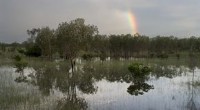
* Deposition: As the floodwaters recede, they deposit sediment (silt, clay, sand) on the floodplain, creating fertile and flat land.
Other factors contributing to floodplain formation:
* Meandering: Rivers often meander (wind) as they flow, further eroding the banks and widening the floodplain.
* Braiding: In some cases, rivers can split into multiple channels, creating a braided pattern. This also contributes to floodplain formation.
In summary: Floodplains are a result of the combined processes of lateral erosion by rivers, deposition of sediment during floods, and the natural meandering or braiding of rivers over time.