1. Volcanoes:
* Convergent boundaries: Subduction zones, where one plate dives beneath another, are the most common locations for volcanoes. This occurs because water released from the descending plate lowers the melting point of the surrounding mantle, leading to magma formation. Examples include the Andes Mountains, the Pacific Ring of Fire, and the Cascade Range.
* Divergent boundaries: As plates move apart, magma from the mantle rises to fill the gap, creating mid-ocean ridges and volcanic islands. Examples include the Mid-Atlantic Ridge and Iceland.
* Hotspots: These are areas of volcanic activity that are not directly associated with plate boundaries. They are caused by plumes of hot mantle rock rising from deep within the Earth. Examples include Hawaii and Yellowstone National Park.
2. Earthquakes:
* Convergent boundaries: The movement of plates towards each other can cause friction, which can trigger earthquakes. Subduction zones are particularly prone to large earthquakes.
* Divergent boundaries: While less intense than convergent boundaries, earthquakes can also occur at mid-ocean ridges as the plates pull apart.
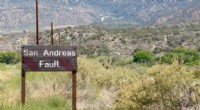
* Transform boundaries: Where plates slide past each other horizontally, the process can cause significant earthquakes. The San Andreas Fault in California is a prime example.
3. Mountain Ranges:
* Convergent boundaries: The collision of continental plates can create massive mountain ranges. The Himalayas, the Alps, and the Rocky Mountains are all examples of mountains formed this way.
* Divergent boundaries: While not as dramatic as those formed by continental collisions, mid-ocean ridges can also create underwater mountains.
4. Ocean Trenches:
* Convergent boundaries: When an oceanic plate subducts beneath another plate (either oceanic or continental), a deep trench forms in the ocean floor. These trenches are the deepest parts of the ocean. The Mariana Trench is the most famous example.
5. Other Features:
* Fault lines: These are fractures in the Earth's crust where rocks have moved past each other. They are often found along plate boundaries.
* Island Arcs: These curved chains of islands form along convergent boundaries where an oceanic plate subducts beneath another oceanic plate.
* Rifts: These are areas where the Earth's crust is being pulled apart. They are often found along divergent boundaries.
It's important to note that these features are not always present at all plate boundaries. The specific features present depend on the type of plate boundary and the geology of the surrounding area.