* Buoyancy: Magma is less dense than the surrounding solid rock. This density difference creates an upward force, like a balloon filled with lighter-than-air gas.
* Pressure: As magma rises, the pressure surrounding it decreases. This lower pressure allows dissolved gases in the magma to expand, further decreasing its density and increasing buoyancy.
* Convection: The heat from the Earth's core creates convection currents in the mantle, which can drag magma upwards.
* Plate Tectonics: The movement of tectonic plates can create cracks and weaknesses in the Earth's crust, providing pathways for magma to rise.
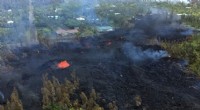
These factors work together to drive magma towards the surface, leading to volcanic eruptions and other geological phenomena.