1. Water Erosion: This is the most common type of erosion. Water can erode land in several ways:
* Rain: Raindrops can dislodge soil particles.
* Rivers and streams: Moving water carries away soil and sediment, carving out channels and valleys.
* Ocean waves: Waves crashing against coastlines can erode cliffs and beaches.
* Glaciers: Moving ice sheets can carve out valleys and transport large amounts of rock and sediment.
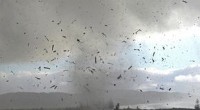
2. Wind Erosion: This occurs when wind picks up and carries away loose soil particles. Wind erosion is most common in dry, arid regions with little vegetation.
3. Ice Erosion: This occurs when glaciers move over land, carving out valleys and transporting rock and sediment. Glaciers can also cause frost wedging, where water freezes in cracks and expands, breaking apart rocks.
4. Gravity Erosion: This is the simplest form of erosion. Gravity pulls soil, rock, and other materials downhill. This can happen slowly, like a landslide, or quickly, like a rockfall.
These are just a few examples of how erosion can occur. It's a natural process that is constantly shaping the Earth's surface.