Here's why:
* Convergent Boundaries: These boundaries occur when two tectonic plates collide. In the case of Mt. Hood, the Juan de Fuca Plate (a smaller oceanic plate) is subducting (sliding) beneath the North American Plate.
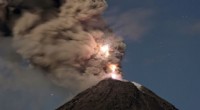
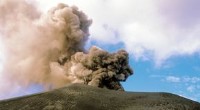
* Volcanism: As the oceanic plate sinks, it melts due to the intense heat and pressure. This molten rock, called magma, rises to the surface and erupts, forming volcanoes.
* Mt. Hood: Mt. Hood is a stratovolcano, which is a tall, conical volcano built up by layers of lava flows, ash, and other volcanic debris.
In summary: The collision and subduction of tectonic plates at a convergent boundary is the driving force behind the formation of Mt. Hood and its volcanic activity.