Here's why:
* Plate Collisions and Mountains: When tectonic plates collide, the immense pressure forces one plate to slide under the other (subduction). This process creates massive folds and thrust faults in the Earth's crust, resulting in the formation of fold mountains. The Himalayas and the Andes are prime examples of this type of mountain formation.
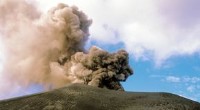
* Volcanic Mountains and Subduction Zones: Volcanic mountains, on the other hand, are formed by the accumulation of lava and ash that erupts from volcanoes. While many volcanoes are located near subduction zones, their formation is a result of the subduction process, not a direct consequence of plate collisions.
* Subduction zones generate heat and pressure, causing the mantle to melt and produce magma.
* This magma rises to the surface, erupting as volcanoes and forming volcanic mountains.
In short: While plate collisions are crucial for the formation of volcanic mountains (by creating subduction zones), they are not directly responsible for the mountains themselves. Volcanic mountains are formed by the volcanic activity triggered by subduction.