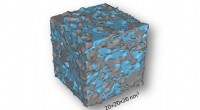
1. Sandstone:
* Formation: Sandstone forms from the accumulation and cementation of sand-sized grains (0.0625 to 2 mm in diameter). These grains are typically composed of quartz, feldspar, and rock fragments.
* Process:
* Weathering and Erosion: Existing rocks are broken down by weathering (physical and chemical processes) into sand-sized particles.
* Transportation: These sand particles are transported by wind, water, or ice to a new location.
* Deposition: The sand particles settle and accumulate in a basin, often at the bottom of a river, lake, or ocean.
* Compaction and Cementation: Over time, the weight of overlying sediments compacts the sand grains together. Dissolved minerals in groundwater precipitate between the grains, acting as a cement and binding them into solid rock.
2. Conglomerate:
* Formation: Conglomerate is a sedimentary rock composed of rounded fragments of gravel (larger than 2 mm in diameter), often mixed with sand and smaller particles.
* Process:
* Weathering and Erosion: Existing rocks are broken down into gravel-sized fragments.
* Transportation: These fragments are transported by water, often in fast-flowing rivers or streams, where they are rounded by abrasion as they collide with each other.
* Deposition: The rounded gravels are deposited in a basin, often near the source of the sediment.
* Compaction and Cementation: Similar to sandstone, the gravels are cemented together by minerals that precipitate from groundwater.
3. Shale:
* Formation: Shale is a fine-grained sedimentary rock composed primarily of clay minerals.
* Process:
* Weathering and Erosion: Rocks are weathered into very fine particles of clay.
* Transportation: Clay particles are easily transported by wind or water, settling in quiet environments like lakes or the deep ocean.
* Deposition: The clay particles settle and accumulate in thin layers.
* Compaction and Cementation: Over time, the layers of clay are compacted under the weight of overlying sediment. Some cementation may occur, but often the layers are held together by weak bonds between the clay minerals.
4. Breccia:
* Formation: Breccia is similar to conglomerate, but it is composed of angular fragments of rock, rather than rounded ones.
* Process:
* Weathering and Erosion: Existing rocks are broken down into angular fragments.
* Transportation: The angular fragments are transported a short distance, often by gravity or rockfalls.
* Deposition: The fragments accumulate in a basin or near the source of the sediment.
* Compaction and Cementation: The angular fragments are cemented together by minerals that precipitate from groundwater.
Key Differences:
* Grain Size: Clastic rocks are classified based on the size of their constituent particles.
* Roundness: Roundness is a measure of how rounded the particles are, and it reflects the distance they have been transported. Rounder particles indicate longer transport distances.
* Sorting: Sorting refers to the uniformity of grain size in a rock. Well-sorted rocks have particles of similar sizes, while poorly-sorted rocks have a wide range of grain sizes.