1. Earth's Magnetic Field:
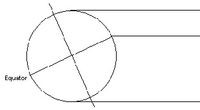
* Earth acts like a giant magnet, with a magnetic field extending out into space.
* This field has a north and south magnetic pole, and the field lines run from one pole to the other.
* The magnetic field's direction flips over time, meaning the north and south poles switch places. This happens irregularly, but on average, every few hundred thousand years.
2. Seafloor Spreading:
* At mid-ocean ridges, new oceanic crust is formed by magma rising from the Earth's mantle.
* As the magma cools and solidifies, iron-rich minerals in the rock align themselves with the Earth's magnetic field at that time.
* This process creates a "magnetic signature" in the rock, recording the direction of the magnetic field at the time of formation.
3. Magnetic Strips:
* When the Earth's magnetic field flips, new rock formed at the ridge will have the opposite magnetic signature compared to the older rock on either side.
* This creates a pattern of alternating magnetic stripes, symmetrically arranged on either side of the ridge.
4. Evidence of Seafloor Spreading:
* The magnetic stripes are a direct record of the Earth's magnetic field reversals over time.
* The symmetry of the stripes and the fact that they mirror each other on both sides of the ridge provides strong evidence that the seafloor is spreading apart, carrying these magnetized strips with it.
In summary: The magnetized strips on either side of an oceanic ridge are like a giant tape recorder, recording the history of Earth's magnetic field reversals. This pattern directly supports the theory of seafloor spreading, where new crust is formed at ridges, moves away, and carries with it the magnetic signature of the time it was created.