1. Matching Coastlines:
* The coastlines of continents like South America and Africa fit together like puzzle pieces. This was first observed by Alfred Wegener, who proposed the theory of continental drift in the early 20th century.
2. Matching Geological Formations:
* Similar rock formations, including mountains, mineral deposits, and rock types, are found on different continents that were once thought to be separated. This suggests they were once connected.
3. Fossil Evidence:
* Identical fossils of land-based animals and plants have been found on continents now separated by vast oceans. For example, fossils of the ancient reptile *Mesosaurus* are found in both South America and Africa. This would be impossible if these continents had always been separate.
4. Paleoclimate Evidence:
* Glacial deposits and evidence of tropical climates are found in locations that are currently too far from the poles or equator, respectively. This suggests that the continents were located differently in the past.
5. Paleomagnetism:
* The Earth's magnetic field flips periodically. When rocks are formed, they record the magnetic field direction at the time. Studying these magnetic signatures in rocks from different continents reveals that they were once connected.
6. Seafloor Spreading:
* The discovery of mid-ocean ridges, where new seafloor is created, and deep-sea trenches, where the seafloor is subducted, provided a mechanism for continental drift. This process, called seafloor spreading, occurs due to convection currents in the Earth's mantle.
7. Seismic Activity and Volcanoes:
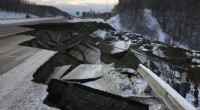
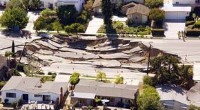
* The distribution of earthquakes and volcanoes aligns with the boundaries of tectonic plates. This further supports the idea that the Earth's lithosphere is broken into moving plates.
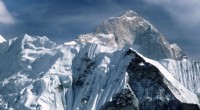
These lines of evidence, taken together, provide strong support for the theory of plate tectonics, which encompasses continental drift. The movement of these tectonic plates is responsible for the formation of mountains, volcanoes, earthquakes, and the distribution of landmasses over millions of years.