Folded Mountains:
* Process: Folded mountains are formed when two tectonic plates collide, causing the rock layers to bend and buckle. This is often referred to as compression.
* Mechanism:
* Convergent Plate Boundaries: This is where two plates move towards each other.
* Compression: The immense pressure from the collision forces the rock layers to fold and buckle.
* Uplift: The folded rock layers are pushed upwards, creating mountains.
* Examples: The Himalayas, the Alps, and the Appalachian Mountains.
Block Mountains:
* Process: Block mountains, also known as fault-block mountains, are formed when tectonic plates pull apart, causing the Earth's crust to fracture and break.
* Mechanism:
* Divergent Plate Boundaries: This is where two plates move away from each other.
* Tension: As the plates move apart, tension is created in the crust.
* Faulting: The tension causes the crust to fracture along fault lines.
* Uplift and Downwarp: One block of crust is lifted (uplift) while the other block sinks down (downwarp), creating a dramatic vertical relief.
* Examples: The Sierra Nevada Mountains in California, the Teton Range in Wyoming, and the Harz Mountains in Germany.
Volcanic Mountains:
* Process: Volcanic mountains are formed when magma rises from the Earth's mantle to the surface, erupting as lava and ash.
* Mechanism:
* Subduction Zones: Often formed at convergent plate boundaries where one plate is forced beneath another.
* Magma Generation: The descending plate melts, generating magma.
* Volcanic Eruptions: The magma rises to the surface and erupts, forming cones of volcanic material.
* Accumulation: Over time, repeated eruptions build up layers of lava and ash, creating a mountain.
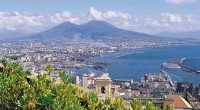
* Examples: Mount Fuji in Japan, Mount Kilimanjaro in Tanzania, and Mount Vesuvius in Italy.
Key Points:
* Tectonic Plates: The Earth's crust is made up of tectonic plates that constantly move.
* Plate Interactions: The way these plates interact (collide, pull apart, or slide past each other) determines the type of mountain that forms.
* Forces: The forces exerted by these movements (compression, tension, or shear) shape the Earth's surface.
Let me know if you'd like more details on any of these mountain types or want to explore specific examples!