Mountains
* Formation:
* Tectonic Activity: Mountains are primarily formed by the collision of tectonic plates (the Earth's crust). This collision can cause the land to buckle, fold, and uplift, creating mountains.
* Erosion: Mountains can also be formed by erosion, where rivers, glaciers, and wind wear down the landscape, leaving behind elevated areas.
* Shape: Mountains can have a variety of shapes, but they are often characterized by sharp peaks, steep slopes, and ridges.
* Composition: Mountains are composed of a variety of rock types, including igneous, sedimentary, and metamorphic rocks.
* Activity: Mountains are typically inactive, meaning they are no longer being formed by geological processes. They are subject to erosion and weathering over time.
Volcanoes
* Formation:
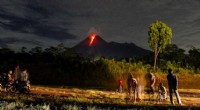
* Magma and Eruptions: Volcanoes are formed by the eruption of magma (molten rock) from the Earth's interior. This magma rises to the surface and erupts as lava, ash, and gases, building up a cone-shaped structure over time.
* Shape: Volcanoes usually have a cone-shaped or dome-shaped structure. They can have a central vent or multiple vents.
* Composition: Volcanoes are composed of volcanic rock, such as basalt, andesite, and rhyolite.
* Activity: Volcanoes can be active, dormant, or extinct.
* Active: Currently erupting or showing signs of unrest.
* Dormant: Not currently erupting, but they have erupted in the past and could erupt again.
* Extinct: No longer capable of erupting.
Here's a simple analogy:
Think of mountains as being like crumpled sheets of paper, formed by pushing them together. Volcanoes are like piles of ash and rock, built up over time by eruptions.
Key Takeaways:
* Formation: Mountains are primarily formed by tectonic collisions, while volcanoes are formed by magma eruptions.
* Activity: Mountains are typically inactive, while volcanoes can be active, dormant, or extinct.
* Composition: Mountains have a variety of rock types, while volcanoes are primarily made of volcanic rock.