* Earth's Atmosphere: Our thick atmosphere acts as a shield, burning up most meteoroids before they can reach the surface. The smaller ones simply disintegrate in the air, creating shooting stars.
* Erosion and Plate Tectonics: Earth's active geological processes constantly wear down and reshape its surface. Wind, rain, glaciers, and the movement of tectonic plates all contribute to eroding craters over time.
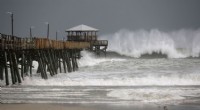
* Ocean Coverage: 71% of Earth's surface is covered by oceans, making it harder to spot craters. Many impact events likely happened in the oceans, leaving little to no visible evidence.
Here's an analogy: Imagine dropping a pebble on a sandy beach. You'll see a small dent. Now, imagine dropping it on a beach that's constantly being washed by waves. The dent would quickly be smoothed out, leaving no trace.
While few craters are obvious, there are still many hidden beneath the surface. Scientists have evidence of past impacts based on:
* Geological Formations: Some rock formations, like the Sudbury Basin in Canada, are evidence of ancient impact craters.
* Impact Structures: Geophysical surveys often reveal buried craters by detecting unusual rock formations or gravitational anomalies.
So, while Earth might appear to have few craters, its history is filled with impacts. It's just that our dynamic planet has a remarkable way of covering up its scars!