* Volcanism: Eruptions of molten rock (lava) from the planet's interior, creating volcanoes, lava flows, and other surface features.
* Tectonics: The movement and interaction of large plates of the planet's crust, causing earthquakes, mountain ranges, and ocean basins.
* Erosion: The wearing down of the planet's surface by wind, water, ice, and other forces.
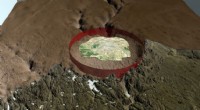
* Impact cratering: The formation of craters from collisions with asteroids, comets, and other objects.
Examples of Geologically Active Planets:
* Earth: The most active planet in our solar system, with ongoing volcanism, tectonics, and erosion.
* Venus: Highly volcanic, with a thick atmosphere that creates a runaway greenhouse effect.
* Io (moon of Jupiter): The most volcanically active body in our solar system.
* Neptune (and its moon Triton): Shows signs of internal heat and volcanic activity.
Evidence of Geological Activity:
Scientists use various methods to determine if a planet is geologically active:
* Observing surface features: Volcanoes, craters, fault lines, and other surface features provide evidence of past or present activity.
* Measuring heat flow: Geothermal heat from the planet's interior can indicate ongoing activity.
* Studying atmospheric composition: Volcanic gases and dust in the atmosphere can reveal volcanic activity.
* Analyzing seismic data: Earthquakes and tremors can indicate tectonic activity.
Significance of Geological Activity:
Geological activity plays a crucial role in shaping planets and influencing their environments:
* Creating diverse landscapes: Volcanic eruptions and tectonic movements create mountains, valleys, and other surface features.
* Regulating climate: Volcanic gases can influence the planet's atmosphere and climate.
* Providing energy sources: Geothermal energy can be harnessed from the planet's interior.
* Supporting life: Geological activity can create conditions suitable for life to arise and evolve.
In conclusion, a geologically active planet is constantly changing and evolving, with ongoing processes shaping its surface and influencing its environment.