While both mountains and rift valleys are dramatic features on Earth's surface, they are formed by opposite forces acting on the Earth's crust.
Mountain Formation (Orogenesis):
* Process: Mountains are formed by compression and folding of the Earth's crust.
* Forces: Caused by the collision of tectonic plates, pushing against each other.
* Types:
* Fold Mountains: Formed when layers of rock are squeezed together and buckle, forming folds. (e.g., Himalayas, Alps)
* Block Mountains: Formed when large blocks of crust are uplifted along faults. (e.g., Sierra Nevada, Vosges)
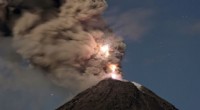
* Volcanic Mountains: Formed by the eruption of magma from the Earth's mantle. (e.g., Mount Fuji, Mount Kilimanjaro)
* Location: Usually found at the edges of tectonic plates, where they converge.
Rift Valley Formation:
* Process: Rift valleys are formed by extension and thinning of the Earth's crust.
* Forces: Caused by the pulling apart of tectonic plates, creating a gap.
* Types:
* Continental Rift Valleys: Form when continents split apart. (e.g., East African Rift Valley)
* Oceanic Rift Valleys: Form at mid-ocean ridges, where new crust is created.
* Location: Found in zones of divergence between tectonic plates, where the crust is pulled apart.
Key Differences in Summary:
| Feature | Mountain Formation | Rift Valley Formation |
|--------------|------------------------------------------------|-------------------------------------------------|
| Forces | Compression and Folding | Extension and Thinning |
| Process | Crust is pushed together and uplifted | Crust is pulled apart and thinned |
| Location | Plate convergence (edges of plates) | Plate divergence (middle of plates) |
| Landform | Elevated areas, often with peaks and ridges | Depressed areas, often with valleys and cliffs |
Example: The East African Rift Valley is a good example of how these two processes are connected. The rift valley is formed by the pulling apart of the African tectonic plate. However, the process of rifting also generates volcanic activity along the edges of the rift, leading to the formation of mountains like Mount Kilimanjaro.
Overall, understanding the forces and processes behind these geological formations helps us comprehend the dynamic and ever-changing nature of our planet.