1. Seismic Waves:
* Earthquakes: When earthquakes happen, they generate seismic waves that travel through the Earth. Geologists use instruments called seismographs to record these waves.
* Different Wave Behavior: Different types of seismic waves (P waves and S waves) travel at different speeds and are affected differently by different materials.
* Interpreting Data: By analyzing the speed, path, and changes in seismic waves, geologists can infer the structure of the Earth's interior. For example, S waves cannot travel through liquids, which helped scientists discover the liquid outer core.
2. Volcanic Eruptions:
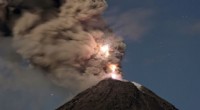
* Magma Samples: Volcanoes bring magma (molten rock) from deep within the Earth to the surface.
* Studying Composition: By studying the composition of volcanic rocks and gases, geologists gain insights into the materials that make up the mantle and core.
3. Gravity and Magnetism:
* Variations in Gravity: The Earth's gravity varies slightly depending on the density of the rocks beneath the surface. By measuring these variations, geologists can map out the distribution of different types of rocks.
* Magnetic Field: The Earth has a magnetic field generated by the movement of molten iron in the outer core. Studying this field helps scientists understand the composition and dynamics of the core.
4. Meteorites:
* Primordial Matter: Meteorites are fragments of asteroids or other planetary bodies that have fallen to Earth. Some meteorites are thought to be similar in composition to the early Earth.
* Clues to Composition: Studying meteorites gives geologists clues about the materials that make up the Earth's core and mantle.
5. Laboratory Experiments:
* Simulating Conditions: Scientists conduct experiments in labs to recreate the extreme pressure and temperature conditions found in the Earth's interior.
* Studying Behavior: They use these experiments to study how rocks and minerals behave under these conditions, which helps them understand how the Earth's interior works.
6. Computer Modeling:
* Combining Data: Geologists use computer models to combine data from all these methods, creating complex simulations of the Earth's interior.
* Testing Theories: These models allow scientists to test their hypotheses about the Earth's structure and composition, and to predict how it might evolve over time.
By combining all these methods, geologists have pieced together a remarkably detailed picture of the Earth's interior, even though we can't directly explore it. This knowledge is essential for understanding everything from plate tectonics and volcanic eruptions to the Earth's magnetic field and the formation of the planet itself.