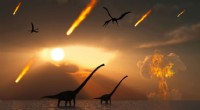
* Formation of Earth: The Earth formed roughly 4.5 billion years ago. The earliest known fossils date back to about 3.5 billion years ago. This means there's a gap of about a billion years where the fossil record is essentially silent. We have other evidence from geology and astrophysics to understand this early period, but fossils don't offer information about the very first stages of Earth's formation.
* Fossil Preservation: The process of fossilization is rare and specific. Only certain conditions, like rapid burial in sediment or volcanic ash, allow organisms to be preserved as fossils. Many early life forms were likely soft-bodied, making fossilization even less likely.
* Limited Information: While fossils provide information about the appearance, behavior, and environment of past organisms, they don't tell us everything about Earth's history. For example, they don't directly reveal the composition of the early atmosphere, the nature of early continents, or the timing of major geological events.
What Fossils Do Tell Us:
* Evolutionary History: Fossils are the primary evidence for evolution. They show how life has changed over time, tracing the lineage of different organisms and documenting major evolutionary events.
* Past Environments: Fossils can indicate the climate, geography, and ecosystems of the past. For instance, marine fossils in a desert suggest that the area was once underwater.
* Plate Tectonics: Fossils of similar organisms found on continents separated by vast oceans provide strong evidence for the theory of plate tectonics.
In summary: Fossils are incredibly valuable for understanding Earth's history, but they don't provide a complete picture, especially for the very earliest stages. They are a window into the past, but not a perfectly clear one.