Here's a breakdown:
* Oceanic Crust: Thinner, denser, and younger than continental crust. It's primarily made of basalt and gabbro.
* Continental Crust: Thicker, less dense, and older than oceanic crust. It's mainly composed of granite and other igneous rocks.
Subduction: When two tectonic plates collide, the denser plate (usually oceanic) slides beneath the less dense plate (usually continental). This process is called subduction.
Key Features of a Subduction Zone:
* Trench: A deep, narrow depression in the ocean floor where the oceanic plate bends downward.
* Volcanoes: As the subducting plate melts, magma rises to the surface, forming volcanoes. These volcanoes often create volcanic arcs, chains of volcanoes along the edge of the continent.
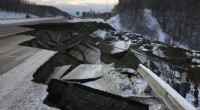
* Earthquakes: The movement and friction along the subduction zone create earthquakes.
* Accretionary Prism: Sediments scraped off the descending plate accumulate at the edge of the overriding plate, forming a wedge-shaped structure called an accretionary prism.
Examples:
* The Ring of Fire around the Pacific Ocean is a prime example of subduction zones.
* The Andes Mountains in South America are another prominent example, formed by the Nazca Plate subducting beneath the South American Plate.
Visualizing It:
Think of it like a heavy blanket sliding under a lighter blanket. The heavier blanket (oceanic crust) goes down, while the lighter blanket (continental crust) rides on top.