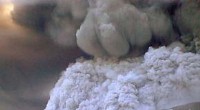
* Extrusive Igneous Rocks: These rocks form when lava cools and solidifies on the Earth's surface.
* Basalt: This is the most common type of volcanic rock. It forms from mafic lava, which is rich in magnesium and iron. Basalt is typically dark gray to black and has a fine-grained texture.
* Andesite: This rock forms from intermediate lava, which has a composition between mafic and felsic. Andesite is typically gray to dark gray and has a medium-grained texture.
* Rhyolite: This rock forms from felsic lava, which is rich in silica. Rhyolite is typically light gray to pink and has a fine-grained texture.
* Scoria: This is a vesicular rock, meaning it has many holes or cavities caused by gas bubbles trapped in the lava as it cooled. Scoria is typically dark gray to black and is often used in landscaping.
* Pumice: This is a very porous, lightweight rock formed when lava containing a lot of gas erupts explosively. Pumice is typically light gray to white.
The specific type of volcanic rock that forms will depend on the chemical composition of the lava, the rate of cooling, and other factors.