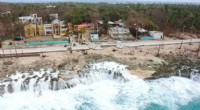
* Landmass Formation: Peninsulas are formed by the buildup of landmass, either through volcanic activity, sedimentation, or tectonic plate movement.
* Constructive Processes: These processes add material to the Earth's surface, creating the characteristic shape of a peninsula – a piece of land extending into a body of water but connected to a larger landmass.
* Examples:
* Volcanic peninsulas: Like the Italian Peninsula, formed by volcanic eruptions and subsequent accumulation of lava and ash.
* Sedimentary peninsulas: Like the Florida Peninsula, formed by the deposition of sand, silt, and other sediments over time.
* Tectonic peninsulas: Like the Korean Peninsula, formed by the movement and collision of tectonic plates.
While erosion (a destructive force) can play a role in shaping the final form of a peninsula, the initial formation is largely driven by constructive processes.