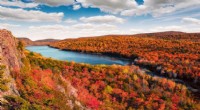
Topography encompasses all the variations in elevation, shape, and features of the Earth's surface, including:
* Mountains: Elevated landforms with steep slopes and significant elevation changes.
* Rivers: Channels of flowing water that carve through the landscape.
* Valleys: Depressions in the land between hills or mountains, often formed by erosion.
* Plains: Flat or gently rolling areas with little elevation change.
* Canyons: Deep, narrow valleys often formed by rivers or erosion.
* Plateaus: Elevated flat areas with steep sides.
* Dunes: Hills of sand formed by wind action.
* Glaciers: Masses of ice that move slowly and carve out valleys and other features.
Topography is a key aspect of geography and plays a vital role in shaping the environment, influencing climate, ecosystems, and human settlements.