Here's a breakdown of the process:
* Solid Rock: Rocks are made up of minerals, which are solid materials with a specific chemical composition.
* Heat: When rocks are subjected to intense heat, the atoms within the minerals start to vibrate faster and faster.
* Melting Point: At a certain temperature, called the melting point, the vibrations become strong enough to overcome the bonds holding the atoms together in a solid structure.
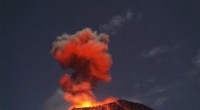
* Molten Rock: The solid rock transitions into a liquid state, now known as magma if it's below the Earth's surface, or lava if it has erupted onto the surface.
Factors Affecting Melting:
* Temperature: The most obvious factor, as higher temperatures lead to more rapid atomic vibration.
* Pressure: Increasing pressure can actually make rocks harder to melt, as it compresses the atoms together.
* Water Content: The presence of water can lower the melting point of rocks. This is because water molecules weaken the bonds between atoms.
* Mineral Composition: Different minerals have different melting points.
Let me know if you'd like more details on any of these factors!