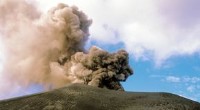
1. Island Arcs: These are chains of volcanic islands that form parallel to the trench. They are formed when one oceanic plate subducts beneath another. The subducting plate melts, and the magma rises to the surface to create volcanoes. Examples include the Mariana Islands, the Aleutian Islands, and the Lesser Antilles.
2. Ocean Trenches: These are deep, narrow depressions in the ocean floor that are formed where one plate subducts beneath another. Trenches are the deepest parts of the ocean, with depths exceeding 10,000 meters. Examples include the Mariana Trench, the Japan Trench, and the Peru-Chile Trench.
3. Volcanic Seamounts and Guyots: These are underwater mountains that may or may not rise above the sea level. Seamounts are cone-shaped volcanoes that form as a result of volcanic activity at the plate boundary. Guyots are flat-topped seamounts that have been eroded by waves.
4. Back-Arc Basins: These are areas of spreading behind the volcanic arc. They are formed by the upwelling of magma from the mantle, which pushes the two plates apart. These basins are often characterized by a thin crust and active volcanism.
5. Transform Faults: These are fractures in the Earth's crust where two plates slide past each other horizontally. Transform faults are often associated with earthquakes. They can occur in the vicinity of trenches, where the subducting plate is offset by a fracture.
It's important to note that not all of these features are present at every oceanic-oceanic boundary. The specific landforms that are formed depend on the rate of plate convergence, the angle of subduction, and other factors.