Here's a breakdown:
* Magma: A mixture of molten rock, crystals, and dissolved gases found beneath the Earth's surface. It's formed by the intense heat and pressure within the Earth's mantle.
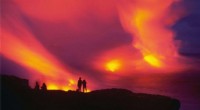
* Lava: Magma that has erupted onto the Earth's surface. The pressure release causes the dissolved gases to expand, making lava more fluid and explosive.
Key characteristics of molten rock:
* High temperature: Molten rock can reach temperatures of up to 1,200°C (2,192°F).
* Fluid: Though solid when cooled, molten rock is a fluid substance capable of flowing.
* Composition: The exact composition of molten rock varies depending on its source and the minerals present.
Importance:
Molten rock plays a critical role in shaping the Earth's surface. Volcanic eruptions, fueled by molten rock, create new landforms, contribute to the Earth's atmosphere, and impact climate.