The theory of plate tectonics is a cornerstone of modern geology, explaining the movement and interactions of the Earth's outer layer. It describes the Earth's lithosphere, the rigid outermost layer, as being divided into several large and smaller plates. These plates are constantly in motion, interacting with each other in ways that shape our planet's surface and influence various geological phenomena.
Here's a breakdown of the key aspects:
1. The Earth's Structure:
* Lithosphere: The rigid outermost layer, composed of the crust and the upper part of the mantle. It's divided into tectonic plates.
* Asthenosphere: A soft, partially molten layer of the upper mantle that allows the lithosphere to move.
2. Plate Movements:
* Driven by Convection Currents: Heat from the Earth's core generates convection currents in the mantle, which exert forces on the lithosphere.
* Types of Plate Boundaries:
* Divergent Boundaries: Plates move apart, allowing magma to rise and create new crust (e.g., mid-ocean ridges, rift valleys).
* Convergent Boundaries: Plates collide, resulting in subduction (one plate sinks beneath another) or mountain formation (e.g., volcanoes, mountain ranges).
* Transform Boundaries: Plates slide past each other horizontally, often causing earthquakes (e.g., San Andreas Fault).
3. Key Geological Phenomena Explained by Plate Tectonics:
* Volcanoes: Formed at divergent and convergent plate boundaries where magma rises to the surface.
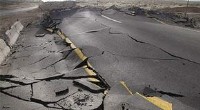
* Earthquakes: Occur at all types of plate boundaries due to the friction and stress generated by the plates' movements.
* Mountain Ranges: Formed by the collision of continental plates (e.g., the Himalayas).
* Ocean Basins: Created by the spreading of the seafloor at mid-ocean ridges.
* Continental Drift: The movement of continents over millions of years, driven by plate tectonics.
4. Evidence Supporting Plate Tectonics:
* Fossil Distribution: Identical fossils found on continents now separated by vast oceans, indicating they were once connected.
* Seafloor Spreading: Magnetic striping patterns on the ocean floor, reflecting the Earth's magnetic field reversals, confirm the spreading of the seafloor.
* Earthquake Distribution: Concentrated along plate boundaries, indicating tectonic activity.
* Geodetic Measurements: Modern GPS data shows the movement of plates in real-time.
5. Implications of Plate Tectonics:
* Understanding the Earth's history and its dynamic nature.
* Predicting and mitigating natural hazards like earthquakes and volcanic eruptions.
* Discovering and managing Earth's resources, including mineral deposits and geothermal energy.
The theory of plate tectonics provides a unifying framework for understanding the Earth's geological processes and its constantly evolving surface. It's a powerful tool that allows scientists to investigate the Earth's past, present, and future, and to anticipate and prepare for the challenges posed by its dynamic nature.