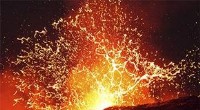
Igneous rocks are formed from the cooling and solidification of magma (molten rock beneath the Earth's surface) or lava (molten rock erupted onto the Earth's surface). The ingredients of igneous rocks, therefore, are the same as the ingredients of magma and lava, which are:
* Silicate minerals: These are the most abundant minerals in the Earth's crust and mantle, making up the bulk of igneous rocks. They include quartz, feldspar, mica, pyroxene, and amphibole.
* Other minerals: Depending on the composition of the magma/lava, other minerals like olivine, garnet, and magnetite can also be present.
* Volatiles: These are gases dissolved in magma/lava, such as water vapor, carbon dioxide, sulfur dioxide, and chlorine. These gases can influence the eruption style and the final composition of the igneous rock.
1. Cooling Rate:
* Slow cooling: This leads to the formation of large crystals, resulting in intrusive igneous rocks (e.g., granite).
* Fast cooling: This results in small crystals or even a glassy texture, forming extrusive igneous rocks (e.g., basalt).
2. Composition of Magma/Lava:
* Mafic magma: Rich in magnesium and iron, producing dark-colored rocks like basalt and gabbro.
* Felsic magma: Rich in silica and aluminum, producing light-colored rocks like granite and rhyolite.
* Intermediate magma: A mix of mafic and felsic components, forming rocks like diorite and andesite.
3. Pressure: The pressure within the Earth's crust plays a crucial role. Higher pressures lead to the formation of different mineral phases compared to lower pressures.
4. Presence of Water: Water can significantly lower the melting point of rocks, leading to the formation of magma.
5. Plate Tectonics: Plate tectonic processes like subduction zones, mid-ocean ridges, and hotspots are the primary drivers of magma generation and thus igneous rock formation.
Additional factors:
* Presence of other elements: Trace elements can influence the color, texture, and properties of igneous rocks.
* Weathering and erosion: These processes can alter the appearance and composition of igneous rocks over time.
These ingredients and environmental factors are interlinked and work together to determine the specific type of igneous rock that is formed. Understanding these factors allows us to interpret the history of volcanic activity and the composition of the Earth's interior.