1. Observation of Celestial Objects:
* Star Trails: By observing the apparent motion of stars in the night sky, we see that they move in circular paths around a fixed point. This point is the projection of the Earth's axis onto the celestial sphere.
* Polaris (North Star): The North Star, Polaris, remains relatively stationary in the sky, while other stars seem to revolve around it. This is because Polaris lies very close to the projection of the Earth's North Pole onto the celestial sphere.
* Seasonal Changes: The tilt of the Earth's axis causes different parts of the world to experience different lengths of day and night throughout the year, leading to seasons.
2. Scientific Principles:
* Newton's Laws of Motion: These laws explain that an object in motion will stay in motion unless acted upon by an external force. This explains why the Earth continues to rotate around its axis.
* Conservation of Angular Momentum: This principle states that the total angular momentum of a system remains constant. The Earth's rotation is a manifestation of this principle, and the tilt of the axis is maintained due to the conservation of this momentum.
* Gyroscopic Effect: The Earth's rotation on its axis acts like a gyroscope, making the axis relatively stable and resistant to external forces that could try to change its tilt.
3. Modern Tools and Measurements:
* Satellites: Satellites orbiting the Earth provide precise measurements of the Earth's shape and its rotation.
* Global Positioning System (GPS): GPS satellites use the Earth's rotation to calculate their positions and provide precise timekeeping, further confirming the existence of the axis.
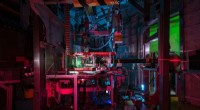
* Laser Interferometry: Scientists use laser interferometry to measure the Earth's rotation with incredibly high precision, allowing them to study small changes in the axis over time.
In conclusion, the Earth's axis is a fundamental aspect of our planet's motion. It is confirmed through observations of celestial objects, the application of scientific principles, and the use of modern tools and measurements.