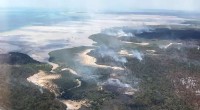
Fjords are formed by glacial erosion. As glaciers move across the land, they carve out deep valleys. When the glaciers melt, the valleys are filled with seawater, creating the characteristic deep, narrow inlets with steep cliffs.
Here are some key features of fjords:
* Deep: Fjords are often hundreds of meters deep, sometimes even exceeding 1000 meters.
* Narrow: They are typically much narrower than they are long, with a relatively small opening to the sea.
* Steep cliffs: The sides of fjords are usually very steep, often rising vertically from the water's edge.
* U-shaped profile: The cross-section of a fjord is often U-shaped, reflecting the erosive power of the glacier.
* Saltwater: Fjords are filled with seawater, but they can also have freshwater input from rivers and streams.
Fjords are found in many parts of the world, particularly in areas that were once covered by glaciers, such as Norway, Greenland, Chile, New Zealand, and Alaska.