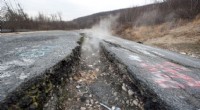
In geography, pyroclasts are the fragments of rock, ash, and gas that are ejected from a volcano during an eruption. The term "pyroclast" literally means "fire fragment." These fragments are often hot and can travel at high speeds, posing a significant hazard to anything in their path.
Here's a breakdown of the types of pyroclasts:
1. Tephra: This is the general term for all volcanic fragments that are ejected into the air during an eruption. Tephra is further classified based on size:
* Ash: Fine-grained tephra less than 2 millimeters in diameter.
* Lapilli: Pebble-sized tephra between 2 and 64 millimeters in diameter.
* Blocks and Bombs: Larger fragments, greater than 64 millimeters in diameter. Blocks are angular, while bombs are rounded.
2. Pyroclastic Flows: These are fast-moving, destructive currents of hot gas and volcanic debris that flow downhill from a volcano. Pyroclastic flows are extremely dangerous, moving at speeds of up to 450 mph and reaching temperatures of 1,300 degrees Fahrenheit.
3. Pyroclastic Surges: Similar to pyroclastic flows but with a lower density. They can travel at high speeds over longer distances and are often associated with explosive eruptions.
The Impact of Pyroclasts:
Pyroclasts have a significant impact on the surrounding landscape and human populations. They can:
* Cause damage to infrastructure and buildings.
* Contaminate water sources and soil.
* Disrupt transportation and communication.
* Lead to respiratory problems and other health issues.
* Form new landforms like volcanic cones and craters.
Studying Pyroclasts:
Geographers study pyroclasts to understand:
* The history of volcanic eruptions.
* The mechanisms of volcanic eruptions.
* The risks associated with volcanoes.
* The potential impacts of future eruptions.
Understanding pyroclasts is crucial for managing the risks associated with volcanoes and protecting human lives and property.