1. Deformation Mechanisms:
* Folding: When rocks are subjected to compression, they bend and buckle, forming folds. The shape and orientation of folds (anticline, syncline) are determined by the direction and magnitude of the stress.
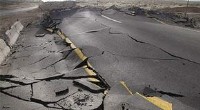
* Faulting: When rocks experience tensional or shear stress, they break and move along fractures called faults. Faults can create distinct offsets in rock layers.
* Foliation: This is a planar structure that develops in metamorphic rocks due to directed pressure. Minerals align themselves perpendicular to the stress direction, creating a layered appearance.
* Lineation: These are linear features within metamorphic rocks, often caused by the elongation of minerals or the development of mineral-rich zones along specific directions.
2. Structure and Deformation History:
* Rock Fabric: The overall arrangement of minerals and structures within a metamorphic rock provides clues about the deformation it experienced.
* Strain: The deformation of rocks is described by strain, which measures how the rock's shape and volume have changed. The intensity and type of strain determine the type of metamorphic structure formed.
* Stress: The forces that cause deformation are called stress. Different types of stress (compression, tension, shear) lead to different metamorphic structures.
3. Examples:
* Schistosity: A type of foliation where minerals are aligned in parallel layers, indicating high pressure deformation.
* Gneissic banding: A type of foliation where alternating bands of different minerals are present, reflecting the intensity and direction of stress.
* Cleavage: A type of foliation where rocks break along planar surfaces, indicating high pressure and localized strain.
* Boudinage: A structure where layers of rock are stretched and thinned, resembling a string of sausages, indicating tensile deformation.
4. Studying Metamorphic Structures:
By studying the structures within metamorphic rocks, geologists can deduce:
* Deformation history: The sequence of events and forces that shaped the rock.
* Stress field: The direction and magnitude of the forces acting on the rock.
* Metamorphic grade: The intensity of heat and pressure experienced by the rock.
* Tectonic setting: The geological environment in which the rock was deformed.
In summary, metamorphic rock structures are not just beautiful patterns; they are key indicators of the intense processes of deformation that shaped the Earth's crust. Understanding these structures helps geologists unravel the history of the Earth and its dynamic processes.