Here's why:
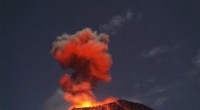
* Igneous rocks are formed from the cooling and solidification of magma (molten rock) or lava.
* Extrusive means the rock formed outside of the Earth's crust, on the surface. This is in contrast to intrusive igneous rocks, which form when magma cools and solidifies beneath the surface.
Some examples of extrusive igneous rocks include:
* Basalt: A dark-colored, fine-grained rock common in volcanic areas.
* Rhyolite: A light-colored, fine-grained rock that forms from more viscous lava.
* Andesite: An intermediate-colored rock with a composition between basalt and rhyolite.
* Scoria: A vesicular (porous) rock with a dark color, often found as volcanic bombs or cinders.
* Pumice: A very porous, light-colored rock that can float on water.
The specific type of extrusive igneous rock formed depends on the composition of the lava, the rate of cooling, and other factors.