Internal Factors:
* Type of eruption: Different eruption styles create distinct volcano shapes.
* Effusive eruptions: These produce slow-moving lava flows that spread out over wide areas, forming shield volcanoes (e.g., Mauna Loa in Hawaii) with gentle slopes.
* Explosive eruptions: These involve violent eruptions of ash, gas, and pyroclastic flows, often forming steep-sided stratovolcanoes (e.g., Mount Fuji in Japan) or volcanic domes (e.g., Mount St. Helens before its 1980 eruption).
* Magma composition: The viscosity (thickness) of magma influences eruption style and shape.
* Low viscosity magma: Flows easily, leading to shield volcanoes.
* High viscosity magma: Tends to build up pressure, resulting in explosive eruptions and steep-sided cones.
* Volcanic plumbing system: The underground network of magma chambers and conduits can affect the location and intensity of eruptions, shaping the volcano over time.
* Volcanic processes:
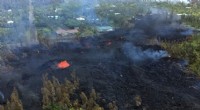
* Lava flows: Can change the shape of a volcano by filling valleys or creating new landforms.
* Pyroclastic flows: High-speed avalanches of hot gas and volcanic debris can reshape the volcano's flanks.
* Calderas: Large depressions formed by the collapse of a volcano's summit after a major eruption.
External Factors:
* Erosion: Weathering and erosion by wind, rain, ice, and glaciers can carve away at the volcano's cone, altering its shape over time.
* Landslides: Large-scale slope failures can dramatically change the volcano's form.
* Tectonic activity: Earthquakes and fault movements can influence the location and intensity of volcanic eruptions, indirectly shaping the volcano.
* Glaciation: Glaciers can erode the volcano's slopes, forming distinctive glacial valleys and cirques.
Other Factors:
* Age of the volcano: Volcanoes change over time as they grow, erode, and become extinct.
* Human activity: Mining, quarrying, or construction can alter the landscape around a volcano, sometimes impacting its shape.
It's important to note that the shape of a volcano is a dynamic feature, constantly evolving through a complex interplay of internal and external forces.