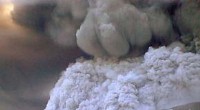
Here's a breakdown:
* Magma: Molten rock found beneath the Earth's surface.
* Eruption: When magma reaches the surface, it's called lava.
* Cooling: As lava cools and solidifies, it forms extrusive igneous rocks.
The rapid cooling of lava leads to the formation of fine-grained or glassy textures, as the crystals don't have time to grow large. Examples of extrusive igneous rocks include:
* Basalt: A dark-colored, fine-grained rock often found in volcanic flows.
* Rhyolite: A light-colored, glassy rock formed from felsic lava.
* Obsidian: A black, glassy rock that cools very quickly.
* Pumice: A light, porous rock formed from frothy lava.
Let me know if you'd like to learn more about any specific type of extrusive igneous rock!