Here's why:
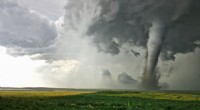
* Meteorology is the study of the atmosphere, weather, and climate. While it involves the Earth, it's a separate scientific discipline from geology.
* Physical geology is a branch of geology that focuses on the Earth's physical components, processes, and materials. It includes topics like rocks, minerals, plate tectonics, volcanoes, and the Earth's interior.
Main Fields of Geology:
The main fields of geology are broader than just physical geology. Here are some key branches:
* Physical Geology: As mentioned, this focuses on the Earth's physical characteristics.
* Historical Geology: This focuses on the Earth's history, studying fossils, rock sequences, and past environmental conditions.
* Petrology: The study of rocks and their formation.
* Mineralogy: The study of minerals and their properties.
* Structural Geology: The study of how rocks deform and form geological structures.
* Geochemistry: The study of the chemical composition of the Earth and its materials.
* Geophysics: The study of the Earth's physical properties using techniques like seismology and gravity measurements.
* Hydrogeology: The study of groundwater and its movement.
* Economic Geology: The study of economically valuable minerals and resources.
* Environmental Geology: The study of the interactions between human activities and geological processes.
So, while meteorology and physical geology are important fields, they represent only a portion of the diverse and fascinating world of geology.