1. Principle of Superposition:
* The oldest rocks are at the bottom, the youngest at the top. This is like the order of pages in a book, with the first page at the bottom and the last page at the top.
* This principle helps scientists establish a relative timeline of events, understanding which events happened before others.
2. Fossils as Time Capsules:
* Fossils within the layers tell us what life existed in that time period. Each fossil represents an organism that lived and died during the formation of that rock layer.
* Fossil succession: Different types of fossils appear and disappear throughout the rock record. By studying these patterns, scientists can understand evolutionary changes over time.
3. Rock Types and Environments:
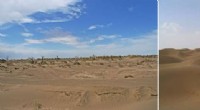
* Different sedimentary rock types indicate different environments: Sandstones might indicate deserts, limestones might indicate shallow seas, and coal might indicate swamps.
* This helps scientists reconstruct ancient environments, climates, and even geographic locations.
4. Clues to Past Events:
* Disturbances in the layers: Folding, faulting, or tilting of the layers can tell scientists about tectonic activity, earthquakes, or volcanic eruptions that happened in the past.
* Sedimentary structures: Ripple marks, mud cracks, or footprints can provide evidence of ancient currents, water levels, or even dinosaur activity.
5. Dating Techniques:
* Radiometric dating: Scientists use radioactive isotopes found within certain minerals to determine the absolute ages of rock layers. This technique is particularly valuable for very old rocks.
6. Correlation:
* Matching rock layers in different locations: By comparing fossils and rock types, scientists can correlate layers across vast distances, understanding how environments and life changed over time and across geographic regions.
In summary, sedimentary rock layers are like a time machine, offering clues about Earth's history, past environments, life forms, and events. By carefully studying these layers, scientists can piece together the story of our planet.