1. Location on a Divergent Plate Boundary: Iceland sits atop the Mid-Atlantic Ridge, a divergent plate boundary where the North American and Eurasian tectonic plates are pulling apart. This constant movement creates space, allowing magma from the Earth's mantle to rise and solidify, forming new oceanic crust.
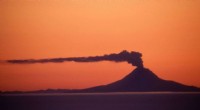
2. Volcanic Activity: Iceland is home to numerous volcanoes, a direct consequence of this ongoing magma upwelling. The most famous example is the eruption of Eyjafjallajökull in 2010, which disrupted air travel across Europe. These volcanoes constantly add new landmass, further expanding the island.
3. Rift Valley Formation: The Mid-Atlantic Ridge runs through Iceland, creating a distinct rift valley. This valley is a visible surface expression of the separation of the tectonic plates. It's a dramatic geological feature characterized by steep slopes and volcanic activity.
4. Young Rocks: Geologically speaking, the rocks in Iceland are very young. This is because they are constantly being formed by volcanic eruptions at the divergent plate boundary. This young age of the rocks is further evidence of ongoing seafloor spreading.
5. Magnetic Stripes: The rocks on either side of the Mid-Atlantic Ridge in Iceland exhibit alternating magnetic stripes, which mirror the Earth's magnetic field reversals. This pattern is a direct result of the spreading process, where new crust is formed at the ridge and carries with it the magnetic signature of the Earth's magnetic field at the time of its formation.
In conclusion: The unique geological features of Iceland, including its volcanic activity, rift valley, young rocks, and magnetic stripes, provide compelling evidence of seafloor spreading, making it a remarkable natural laboratory for understanding this fundamental geological process.